Showing posts sorted by relevance for query cross training. Sort by date Show all posts

30 July 2008

Cross-Training, Part I

Being a former triathlete myself, I laughed so hard when I saw the following video.


First of all, let me just go on record saying that this type of cross training is so wrong in so many ways and really should not be attempted. Secondly, soft paddles to the body don't truly reflect the actual open water experience of thrashing swimmer kicks to the head. Though, however crazy as it looks, the fact remains...it's a pretty accurate representation of what actually happens to a racer in a triathlon. And cross training your body (and your mind) is one of the greatest ways you can prepare yourself for that day.

Seriously though, I'm assuming it's fairly widely understood that most athletes can increase their performance by training in multiple disciplines. Performance in long-distance running can be greatly influenced and improved upon by many other exercises out there. Cross training not only gives your body the break it needs to recover from the constant pounding it receives from all the hard surface running it receives, but it can seriously help to reenergize a person. Even sports designed to increase flexibility, such as swimming, that require quick, agile, responses can improve your overall run.

Runners of all abilities have discovered the many benefits of cross training as a means to enhance their total conditioning and running performance. Yet, despite its popularity, some runners still wonder why they should participate in other aerobic activities if the central purpose of marathon training is to complete a 26.2-mile event, not a triathlon.

Benefits and Purposes of Cross-Training
  • Adds variety to your training and decreases the chance of burnout - It can occasionally be substituted for "easy day" of running (as an aerobic workout). It may also serve as an injury prevention measure. Certain activities such as cycling can strengthen related muscle groups and soft connective tissue.

  • Increases upper body strength - This is very important late in a marathon, as neck and shoulder muscles often become fatigued. Upper body strength is an important asset in ascending hills.

  • Provides an additional means of burning fat - This is always important to the serious runner.
Precautions and Considerations
  • Cross-training is not intended to replace running - In other words, don't substitute a three-hour bike ride for a three-hour long run. That's just plain dumb. This is the concept of sports specificity (as a three hour bike ride won't provide the training effect needed to run a marathon).

  • Use common sense when deciding whether to add certain sports to your fitness regimen - Refrain from lateral, stop and go, bounding, and high impact activities along with those with quick/sudden movements.

  • Utilize rest days - At least one day per week should be scheduled as a complete leg-rest day. Particularly important, prior to your long run it is crucial to be as rested as possible. While participating in your favorite cross-training activities can be helpful as a means of losing weight, don't overdo by skipping rest days, particularly for your legs. Over-training can lead to a variety of injuries.

  • Stretching - Stretch thoroughly after working out in any manner. If you choose to stretch prior to running, be sure to warm-up your muscles by walking briskly or by lightly jogging.

01 August 2008

Cross-Training, Part II

As we learned a couple days ago, cross training is definitely something to consider adding to your normal training regimen. Now let's look at the types of benefits specific sports have to offer.


Benefits of Specific Sports

The following are great cross-training options that, when infused carefully into your workout routine, will enhance your half-marathon and marathon training. Be sure to follow the precautions and considerations from my prior blog post.
  • Cycling - This exercises related muscle groups such as the quadriceps and shins, both of which don't develop as rapidly as the calf muscles and hamstrings. Cycling also strengthens the connective tissue of the knee, hip, and ankle regions, thus reducing the risk of injury. After a stressful run, cycling also loosens fatigued leg muscles. Key points to remember: Don't cycle on a scheduled rest day. Since it's much more difficult to run after cycling, run first before heading out on your bike. Spin easily as opposed to grinding the big gears. Be sure your seat height and pedals are properly positioned. Finally, always wear a helmet and leave the music headphones at home.

  • Swimming - One of the best cross-training activities for several reasons. Swimming enables one to build muscular strength and endurance while improving flexibility. It is especially recommended for those who want to prevent injury, are pregnant, are recovering from an injury, are suffering from joint or bone conditions, or are overweight and want to exercise in a weightless environment. For the compulsive runner who has a hard time taking a rest day, swimming gives those fatigued leg muscles a breather while at the same time, provides an excellent upper body workout. Additionally, water is considered a healing medium, providing a therapeutic effect for all muscle groups. While gentle kicking alleviates some muscle soreness and fatigue, avoid using the kickboard for hard kick sets on your running rest day. Keep in mind that compared to other cross-training activities, your heart-rate may not reach as high a level while swimming (typically 10 to 20 beats per minute less than what it is for dry land activities) due to the loss of gravitational force, the horizontal position, and the cooling effect of the water temperature. Nevertheless, what truly counts is that the heart, lungs, and muscles are still processing oxygen.

  • Deep Water Running - This cross-training activity is just what the doctor ordered for the rehabilitation of many running injuries. Because there is no shock from foot strike, water running is a great alternative to a mid-week "easy day" run. For either purpose, it should be based on your current level of ability and present dry-land running schedule. While it is possible to run in the water without floatation aids, find a pool that has these devices (e.g., vests, belts, etc.) to make your workout easier.

  • Ergometer (Rowing) Machine - This is another great cardio-vascular activity that can be done on a rest day. It strengthens the hips, buttocks, and upper body while sparing the legs of heavy pounding. Be sure to learn proper rowing technique to maximize the benefits of this activity.

  • Nordic Track Ski-Simulator Machine - This challenging workout is highly effective in building/maintaining aerobic conditioning and endurance while strengthening the muscles of the upper and lower body. Because it requires the ability to balance and coordinate duel action movements of the upper and lower extremities, proper form must be learned and utilized. In short, this is great workout for runners interested in supplementing their training.

  • Stair-Master - This activity provides a great cardio-vascular workout while being rather gentle on the skeletal system. To achieve maximum benefits, proper form and posture must be utilized. Because of the vigorous exercise the leg muscles receive from this machine, it is not recommended as a supplemental workout for a complete leg rest day.

  • Elliptical Trainer - These machines provide a great total body cardio-vascular workout. Their oval-like (ellipse) motion provides the user with the feel of classic cross-country skiing, stair climbing, and walking all in combination. The elliptical trainer can be programmed to operate in either a forward or backward motion, providing a low-impact workout for all the all the major muscles in the legs. The backward motion emphasizes the gluteal muscles (buttocks). A great upper body workout can be achieved by using the two poles located on each side of the machine in conjunction with the leg motion.

  • Walking - This is a very under-rated activity that provides great therapeutic benefits following a long run or speedwork. While walking is not intended to be a substitute for an easy running day, a relaxed two to three mile stroll is a great way to loosen up the legs the day prior to a big race. Depending on the type of injury, speed walking is a great rehabilitation activity to maintain cardio-vascular fitness.
An additional reminder. Whether you use a fitness center's exercise equipment/gear or your own, it is vital that you obtain instruction in its correct use for the specific sports you select for cross-training. To receive the maximum benefit while minimizing your chances of incurring injury, it is also very important that you perform these activities utilizing proper form, technique, and posture. A certified fitness instructor can provide guidance in these areas.

01 December 2007

Tips For Winter Running

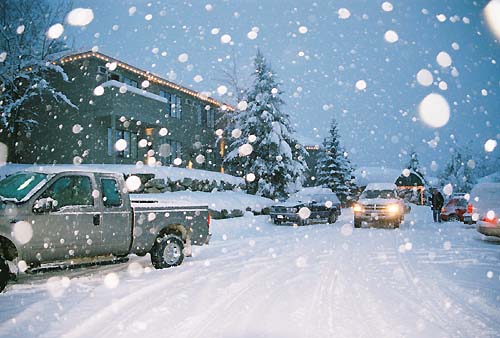
As I look outside, I see this weekend's icy mix already beginning to creep into the area. And to help me better prep for cold weather training soon to come, I've decided to tackle the concern of which seems to be on most runner's minds lately. That is how best to gear up for and survive a season of winter running. You see, when it's 20 degrees outside our common sense tells us to stay indoors where it's much more comfortable. But that doesn't get the job done.

Here are a few widely accepted recommendations to help your winter season be not only survivable, but actually enjoyable.

  1. Have a plan and make it known - Most winter weather can produce treacherous conditions, which creates dangerous running routes. By letting someone know where you will be and for how long, you can be assured help is on the way if an accident occurs. Choose areas that are safe, well-lit, with low traffic. Along with it, bring some identification (personally, I run with a RoadID Wrist ID) and possibly a cell phone. If you choose to run in the dark, try running against the flow of traffic and wear light-colored clothing with reflective fabrics to be more easily seen.


  2. Run with a friend - Though running alone has its own benefits, by running with a partner you'll have a built-in motivational source and have a chance to chat with someone along the way. This can also provide a certain level of accountability, otherwise known as the guilt-eliminator. Besides, it's safer to run in numbers.


  3. Dress for the weather - Having the right apparel and layering makes all the difference in the world. Layering is the key to avoiding over or under dressing. A layer that blocks the wind, pants/tights and top that wick the moisture away from your skin and for the coldest of days a mid-layer that fits more loosely like fleece that insulates and moves the moisture from your base layer away from your skin. Your winter running wardrobe should include a running jacket, hat or headband, gloves, tights and a few long sleeve shirts. Your body temperature increases as you run, so you don't need many layers in most winter conditions. Which correlates closely with the next tip ...


  4. Don't dress too warmly - As all runners know, over-dressing is easy to do. However, over-dressing in winter conditions can increase the risk of overheating or excessive sweat. By dressing for 10-15 degrees warmer than outdoor conditions (typically for me, this is the wind-chill temp) your body temperature can maintain some level of consistency. Try remembering the basic technique of base layer, insulator layer, and outer layer. Each serve a purpose for avoiding perspiration while being breathable. Depending on the wind chill temperature, you may not always need all three layers. Usually, two of the three layers are sufficient but this becomes a personal decision. Also check out the chart below for possible frostbite concerns.


  5. Begin your run into the wind - A great trick of winter running seems to be starting your route by running into the wind. Not only does this allow you to avoid being chilled by colder air blowing in your face after you've been sweating, but you'll finish with the wind at your back and possibly speed your time.


  6. Warm up gradually - On very cold days, it’s a great idea to do some exercises or warm-ups prior to going outdoors. You may walk around the house, jog in place, do some jumping jacks or pushups, etc. The idea is to head out the door already warmed up (not sweating) so the first few minutes or miles are not spent trying to warm up in an already cold environment. Remember, the body’s defense mechanism when it’s cold is to pull blood from the extremities to your core to keep the body temperature regulated.


  7. Hydrate yourself - Like all activities, and especially for longer runs, drink plenty of water before, during, and after your running workouts. If you become dehydrated, the body has a much harder time regulating temperature. You need to remember that your body still loses a lot of water even if you aren't sweating.

  8. Be wary of uneven surfaces - In cold weather, your muscles typically will not react as quickly. This can increase your chances of muscle strains and other injuries when running in snow or icy conditions. If your route looks particularly hazardous, possibly opt for an easier course or try some cross-training until conditions improve.


  9. Change up your routine - It's bad enough running during the colder months, but even more difficult to get that long run in if there's inclement weather or poor surface conditions. My suggestion: be prepared to adapt to a variety of cross-training methods as needed. Only run half the amount you would normally run, but then spend the other half on an indoor bike, weight training, or pull out those old exercise videos. Either way, you'll maintain your strength and cardiovascular endurance until the weather outside allows your normal routine.


  10. Have fun - Running in colder weather, with snow and sometimes ice, can be rather tricky and cumbersome. But if you're wary of the risks, dress warmly, and make it a point to run safely, it's a whole new world out there to enjoy. I'll admit, winter is possibly my most favorite time of year to head outside to run. Not only am I tackling something many people wouldn't dare try, but I am able to experience the beauty and stillness that only this season can offer.
Enjoy the snow outside, and be safe.


10 March 2008

Ten Golden Rules

Alberto Salazar is one of the greats. He knows a thing or two about this sport called running. A former world-record holder in the marathon, and three-time winner of the NYC event, Salazar has learned many of his lessons the hard way. The famously competitive runner's body broke down at age 27, as a result of years of superhuman, 150-mile training weeks. In fact, he was once read his last rites after crossing a finish line with a 108-degree fever. Let's just say he'd be an interesting training partner.

Just this past summer, he survived a near-fatal heart attack. Now, fully recovered, the 49-year-old coach of Nike's Oregon Project is pairing cutting-edge technology with meticulous workouts to shape the most promising crop of American running hopefuls in a generation. This is a man who has almost given his life to the sport on multiple occasions.

Fortunately, he's lived to share a few pieces of essential wisdom ... his Ten Golden Rules of Running:

  • BE CONSISTENT - Find a training plan that you can stick to long-term. If you can run four days a week, every week, you are going to get 90 percent of the benefits of training seven days a week.

  • TAKE RECOVERY DAYS SERIOUSLY - The day after a tough workout, the most you want to do is jog lightly or do some form of cross-training, like cycling. You need a recovery day after a hard day. No exceptions.

  • INCREASE MILEAGE GRADUALLY - Do not increase your weekly mileage by more than 10 percent every month. No matter how good you feel, be very gradual. You won't know until it's too late that you're overdoing it.

  • STAY ON THE TRAIL - Pavement damages joints, tendons, ligaments, and muscles. The more you can run on grass, wood chips, or dirt, the better off you are.

  • RUN FASTER - It's hard to race faster than you train. However fast you want to run a race, you've got to do some shorter intervals (aka: speed work) at least that fast.

  • STRENGTHEN YOUR WHOLE BODY - Good runners condition their whole bodies. The arms drive the legs. Keep your upper body and core toned with a lot of push-ups, pull-ups, sit-ups, and back raises (don't forget that the back is part of the core).

  • WEAR THE RIGHT SHOES - The second-most-common cause of injuries, next to running too much on hard surfaces, is foot pronation and shoe instability. The more you run, the more support your foot needs.

  • PERFECT YOUR FORM - Every motion your body makes should propel you directly forward. If your arms are crossing or you are overstriding, you're losing force. Your posture should be straight, and your striding foot should land directly underneath you.

  • EMBRACE TECHNOLOGY - If you don't have enough knowledge behind what you're doing, you're not going to run well or you're going to injure yourself. With the Internet, GPS phones, advanced heart-rate monitors, and even your iPod, you now can be coached individually, even while you run. Use the knowledge and tools that are out there.

    And, perhaps, my most favorite:

  • TACKLE DOUBT HEAD-ON - At some point you're going to push yourself harder, you're going to enter into a gray area that can be painful, and you're going to doubt yourself. Push through it. Never think you are mentally weak.

  • 11 April 2008

    Hall To Run London Marathon

    Ryan Hall, who won the U.S. Olympic marathon trials this past fall in New York, will be testing himself at the London Marathon this Sunday on his way to Bejing.

    Astoundingly, this is only his third marathon. He made his debut by finishing seventh at last year's Flora London Marathon, then went on to steamroll the field and the hills in Central park on his way to a trials record victory on November 4th.

    Hall, who has lived at altitude (7,000 feet above sea level at Big Bear Lake, in the San Bernadino Mountains) since he was 3 years old, thinks he discovered his talent late. "My very first run was 15 miles around the lake," Hall said. "You would think I would have known I could be a distance runner."

    After twice winning the California state cross-country championships in high school, Hall went on to Stanford in search of his Olympic dream. But, in the process leaving his close-knit family of five siblings, he began to struggle with results, weight gain and depression. He quit Stanford for one academic quarter and regrouped on long forest runs with his father, drawing strength from his deep Christian faith and family. He then returned to become the runner-up at the 2003 N.C.A.A. cross-country championships and won the 2005 championship at 5,000 meters.

    "I think what I've learned from having success in high school and losing it all in college, it taught me you can't make your life successful based only on athletics," Hall said.

    He learned that lesson painfully at the trials. He had trained with Shay in Mammoth, Calif., and he and his wife Sara were teammates at Stanford with Shay’s wife, Alicia. Hall was ecstatic after crossing the finish line first. Fifteen minutes later, he was overcome with grief. He and Sara stayed with Alicia Shay in January in Flagstaff, Ariz., where they trained and coped together. Sara, a 5,000- and 1,500-meter runner, will compete at the track trials in June with Alicia. Hall keeps a picture of Shay in the bible he carries with him.

    This Sunday's event is his last big race before the Olympics. Apparently, he feels he needs this short-term goal to help gauge his training against some of the world's top talent later this summer.

    "I needed something else to be excited about," Hall said Wednesday in London. "You could go crazy thinking about it for six months."

    01 February 2008

    And Marathons For All

    Did I mention a while back that had I registered for Grandma's Marathon? Well I did, and stayed up well past midnight to make sure my online registration was properly accepted. No bother, because I'm now all set to race in what I feel to be one of the most beautiful marathons the U.S. has to offer a runner. It will be held in Duluth, MN on June 21st. If you're a marathoner, this is a great race. I get excited about this race each and every time I race it. Of course, I get that way with every marathon I run.

    You see, I have this feeling that everyone needs to attempt the marathon experience at least once in their lifetime. Alright, maybe I didn't mean "everyone" in the literal sense, but most of the runners out there anyway. I guess I consider the marathon distance to be one of the pinnacles of running, and something everyone should be allowed to sit in awe of their accomplishment at the finish line. Many runners and non-runners alike view the marathon as the ultimate running achievement, and often as something to aspire to. Not only does it deserve vision, dedication, and months of training, but it requires hours of race-day effort. Just far enough to push your boundaries, but not so far out of reach that you cannot obtain it through perseverence. When you look at it like that, it's quite possibly one of the perfect goals your everyday runner can have. And, I guess, in a sense Grandma's has been my aspiration for many years now. But the thing is, I'm beginning to also feel that it's become that continual "once-in-a-lifetime" for me ... like 14-times over-continual. Possibly it's time to add some new training incentives?

    So enter my largest running goal of 2008: running in November's ING New York Marathon. Like I say, if you want to dream, be sure to dream big. Honestly though, I really want the chance to experience running in this big-city race. To encounter each of the five culturally and ethnically diverse neighborhood boroughs, to cross over the five equally unique and architecturally diverse bridges, and to soak in the thousands of spectators in the finishing lap through world-famous Central Park. Yes, I am trying to enter into one of the biggest marathon experiences out there in the world today. But let me also go on record saying this chance won't come easy.

    Now if only I were a faster runner, I might have a good shot at a guaranteed entry through qualification. But I'm just not Lance Armstrong-fast (yeah, some guys have all the luck.) I guess I'll have to take my chances with the race's application lottery. Groan. I have heard so many horror stories from runners who have tried repeatedly to enter NYC via the application lottery method, only to be passed over the full three years before finally obtaining acceptance by default. Though I will gladly wait the full three years if need-be, personally I'd rather not delay my experience that long. In order to run this year in November, I am going to need a "golden ticket". Quite literally, a guaranteed entry into the race.

    So is there any possibility this Midwestern runner will be able find the right Willy Wonka bar in time? As it turns out, possibly so.

    I have this friend (a friend of a friend, who's brother's roommates's cousin's first nephew ... alright, you get the picture) and she works for ING ... who also happens to be the title sponsor for the NYC marathon. Through some earlier discussions and inquiry, she has been in contact with those involved with the race. To my surprise, they are attempting to secure a race "sponsorship" on my behalf. What is a sponsorship exactly? To be quite honest, I don't really know as yet. But, if all goes well, it might be that golden ticket I've been trying so hard to find.

    Within a few weeks I should hopefully know more, so say a little prayer for me. Who knows, maybe this will be the beginning of a long time ambition of mine to run a marathon in each of the 50 states. Uff-da, I forgot to mention that one to my wife yet.

    14 January 2008

    Loop The Lake

    I went out for a trail run at a local state park lake yesterday and really enjoyed it. The four-mile long looping pathway was refreshing and challenging, and gave me confidence that my winter training is still quite solid. The semi-hilly route begins at the swimming area, winds in and around a variety of inlets and peninsulas, along a dam and over a spillway, through a favorite camping area of ours, and over an old iron bridge or two before finishing at the boat docks. Due to the steady accumulation of snow we receive each winter, this unplowed trail is typically slick and treacherous enough that I normally resolve myself to urban street running until spring thaw. Coupled with the fact that I had stayed up well past midnight on Friday evening (had a blast playing board games with friends & family) and kept myself fairly busy most of the day on Saturday and Sunday morning as well, it only intensified my desire to rest and relax, possibly even catch a few rare moments of an afternoon nap. But something made me think of that trail on my way home from church, and as I mulled over the idea, slowly but surely, my adventurous spirit began to kick in.

    I suppose what didn't help was the beautiful day we were having outside; high 20's and sunny. It truely was an opportunity I couldn't let pass. So I dug around my gear to find a warm thermal shirt and running jacket, my pair of UA winter-weight tights and fleece gloves, and grabbed my favorite "Minnesotan" hat ... the dilapidated one with the trademark tassel that swings wildly back and forth as I run. Also tossing the camera into my Jeep, I set off across the local back roads towards the state park a few miles away. Happening by a few fields on my way, I managed to observe an entire cluster of wild turkeys, all of whom seemed oblivious to my passing. Fortunately for them, they'll be safe for a while longer until spring hunting season begins. At the park entrance, I slid it into four-wheel drive and carefully made my way down to the boat dock area below.

    Parking next to a couple other vehicles near the boathouse, I could already see the set of footprints of someone had already set up shop for a chilly round of ice fishing on the lake in the distance. Another set of ski tracks led away from the parking area and entered my intended trail at the edge of the lake. Affixing the pair of Yaktrax to my running shoes and pulling on my hat and sunglasses, I started off at a cautious gait as I made my way over to the trail head. Much of the path here was covered in roughly 4-6" of snow powder, with a slight crust just a couple inches under the fresh surface. Though I noticed faint sets of tracks from a few earlier visitors, most likely days before me, the cross-country ski tracks appeared much newer and I decided to follow those in anticipation of firmer footing. Tightening the straps on my ice cleats, I plodded off down the trail.

    The first half-mile or so was filled with an icy winding path and heaps of deadfall. It seems much of the debris had fallen during an ice storm we had received in mid-December, and would likely remain in their resting places until park crews came out later for their spring clean up. To the best of my ability, I managed to find the paths of least resistance around each pile I encountered and only needed to hike it off-path once. Luckily I didn't venture too far into the woods, as I may have needed a pair of snowshoes further in. As I rounded the southern portion of the lake to head west, the area opened up and the trail crossed over a small bridge there. I must have startled a couple of squirrels on the path because they scattered quickly and beat me across the bridge by more than a few meters.

    With the added Yaktrax traction, the next section wasn't as daunting as I had originally feared. A couple hundred feet further on, I encountered the largest and steepest hill of the entire route. It's a monster, trust me. I have troubles at times just clearing it on my hardtail. But up I went, and soon I was at the top panting like a furious sled dog. Stopping for a moment, I glanced out over the treelike at the pure and smooth lake surface as it extended far into the distance. I could see the ice fisherman still toiling away, hoping for a few for his troubles. Back down the other side and around the bend, I jogged past the trail entrance that led to a local kids camp in the area. This particular camp I have become more familiar with in the last couple of years. Interestingly, a partner and I have recently hosted a couple of adventure races there. They offer a beautiful area with rugged terrain, filled with horse trails and bunkhouses. We've also used the entire state park as part of each event, and hope to use funds raised through our efforts to install a permanent orienteering course. Though we haven't discussed plans for this coming season, it is my hope we will be able to bring our 12-14 hour race back to the area soon again.

    Heading past this trail and along the lakeshore for another 10-15 minutes, I popped out onto the trail above the dam. This seemingly flat portion follows a straight path towards an iron bridge overlooking a large spillway. Over this and you enter the state park camping facilities, though a bit dormant for this time of year. I followed one of the paved roads which meandered through stacks of picnic tables and empty lots, and marveled at how my ice cleats clicked loudly on the hard surface. I made a mental note that it may not be as such a good idea, since I didn't want to end up ruining cleats and damaging the rubber bands under my shoes.

    Jumping back off the roadway and onto a transitional path, I crossed over from the camping sites and into a recreational area complete with playground and shelter. The long northeastern slope there necessitated a grueling long climb up and then back down. The next trail entered me back into the woods along the water's edge and carried me for another half-mile or so until I arrived at the boat landing area. Here, I hesitated a moment before venturing out onto the ice a few meters or so to test the surface. Feeling confident, I ran the ice for maybe a hundred meters more to the edge of the landing parking lot. There the trail follows another narrow and extensive peninsula to a long iron bridge which fills the gap between the northern and upper-eastern portions of the lake. Across the bridge I ran and, upon reaching the far side, I began the last portion of trail that would take me into the parking area where I'd left my Jeep.

    This was perhaps the most beautiful part of my run. As I ran south along the edge of the lake, everything took on an noticable ethereal focus. Though the sun was high overhead, it illuminated every branch and bush on the trail with a crisp icy whiteness. I thought about how I could've been at home napping, how I could have been resting all warm and cozy, and how I could have ultimately missing this rare, scenic moment. You know, it's times like these that make challenging your endurance all worthwhile. And as I packed up my gear and started the Jeep, I breathed a prayer in thankfulness. And promised myself I'd be back again soon.

    14 February 2008

    Falling in Running Love, Again

    At first, you couldn't get enough of each other. The grass was greener, the sky was bluer, there was a bounce in your step. You were running on air. But as the weeks turned into months, and the months dragged into years, things changed. One day, it hits you: you've lost that spark. You're going through the motions. The thrill, as they say, is gone. So where did things go wrong? And more important, can you rekindle the flame?

    I'm talking about our love for running here, folks. And your relationship with your running, just like most relationships, takes work. Here are some ideas to keep your love alive:

    Respect. Running is wonderful, but if you don't respect its power, it can lash out in painful ways. Acknowledge the rigors of the sport, as well as your own limits. Translation: Don't over-reach. If the farthest you've ever run is 8 miles, don't attempt a half-marathon tomorrow. If you're accustomed to running every other day, don't go daily all at once. Show running the respect it deserves, and it will treat you right.

    Spontaneity. Familiarity doesn't have to breed contempt. You know all those vacation days you've amassed? Why not use one some random weekday, and go for a long, relaxed run? Sleep in a bit and hit your favorite trail or route while everybody else is stuck at work.

    Quality Time. Too many runners heap on the miles, setting themselves up to see running as nothing more than a number in the logbook. No wonder they fall out of love...what kind of relationship is that? Learn to spend time deeply breathing in the sweet spring air, watching a flock of geese winging overhead, marveling at the sheer physics of human locomotion. It'll beat miles of head-down slogging any day.

    Flexibility. Not the touch-your-toes variety. We're talking about the give-and-take that is necessary for any relationship to survive. If your expectations are rigid, sooner or later something will break-most likely your spirit. Not only that, but adhering to your training schedule too obsessively may leave your priorities all out of whack. Running should bend to accommodate your life-not vice versa. If you're feeling crummy, be flexible enough to allow yourself a day without running.

    Appreciation. Let's face it, our love for running is full of ups and downs. Some find themselves plagued by series of injuries along the way, while still others lose enthusiasm. Whatever it may be that keeps you from hitting the trail at times, remember to appreciate it for what it is, even if you're not out there. Running, essentially, is freedom. It's your chance to get away, to reconnect, to focus or unwind. It helps us stay healthy and fit, many times encouraging us to push the envelope, but to also remember our limitations. And sometimes, it just teaches us to be humble and know we are human. For some it is as simple as answering the age-old question of why: "Because I can."

    Spread the Love. Every relationship is a two-way street, and the more you put into it, the more you'll get out. There are plenty of ways to "give something back" to the running community. From volunteering at a local race, to assisting your local high school cross-country coach, to encouraging a sedentary friend to join you for a short weekly jog. You'll feel better about yourself, and being around new runners will rejuvenate your own love for the sport.

    So what are we left with? The initial thrill of the beginning runner inevitably fades. You can't stay gaga forever. The good news is that beneath the infatuation is something even better, more mature, and ultimately more rewarding-a love that will sustain you for years to come.

    - Runner's World