Showing posts sorted by relevance for query Running Tips. Sort by date Show all posts

12 June 2008

Summer Running Tips

Maybe I should have titled this, "Summer Wading Tips"...

Ever had one of those days where you were running as hard as you could, but somehow you felt like you weren't getting anywhere? Well, today is one of those days. You see, I had intended to work up a race report or two (I am very anxious to provide some details about the adventure race from Sunday) by today, but the weather has had other plans for me. I woke up in the middle of the night to additional flooding in my basement, much to my surprise. Fortunately, I've been able to keep it under control (more due to the weather system subsiding in our area than to my own expertise) though I have much more carpet drying out now. Once I have these issues contained, I promise to whip up some decent blog posts for you all to savor over (and, Topher, I take tags seriously).

For now, here's some thoughts on tips for summer-weather running. Stay hydrated, cool, and safe this summer!
  1. Avoid dehydration!!! You can lose between 6 and 12 oz. of fluid for every 20 minutes of running. Therefore it is important to pre-hydrate (10-15 oz. of fluid 10 to 15 minutes prior to running) and drink fluids every 20-30 minutes along your running route. To determine if you are hydrating properly, weigh yourself before and after running. You should have drunk one pint of fluid for every pound you're missing. Indications that you are running while dehydrated are a persistent elevated pulse after finishing your run and dark yellow urine. Keep in mind that thirst is not an adequate indicator of dehydration.

  2. Avoid running outside if the heat is above 98.6 degrees, body temperature, and the humidity is above 70-80%. While running, the body temperature is regulated by the process sweat evaporating off of the skin. If the humidity in the air is so high that it prevents the process of evaporation of sweat from the skin, you can quickly overheat and literally cook your insides from an elevated body temperature.

  3. When running, if you become dizzy, nauseated, have the chills, or cease to sweat…STOP RUNNING, find shade, and drink water or a fluid replacement drink such as Gatorade. If you do not feel better, get help. Heatstroke occurs when the body fails to regulate its own temperature, and the body temperature continues to rise. Symptoms of heatstroke include mental changes (such as confusion, delirium, or unconsciousness) and skin that is red, hot, and dry, even under the armpits. Heatstroke is a life-threatening medical emergency, requiring emergency medical treatment.

  4. Run in the shade whenever possible, avoid direct sunlight and blacktop. When you are going to be exposed to the intense summer rays of the sun, apply at least SPF-15 sunscreen and wear sunglasses that filter out UVA and UVB rays. Consider wearing a visor that will shade your eyes and skin, but will allow heat to be transferred off the top of your head.

  5. If you have heart or respiratory problems or you are on any medications, consult your doctor about running in the heat. In some cases it may be in your best interests to run indoors. If you have a history of heatstroke/illness, run with extreme caution.

  6. DO wear light colored breathable clothing. DO NOT wear long sleeves or long pants or sweat suits. Purposefully running in sweat suits on hot days to lose water weight is dangerous!

  7. Plan your route so you can refill water bottles or find drinking fountains. City parks, local merchants, and restaurants are all good points to incorporate on your route during hot weather running. Be sure to tell someone where you are running how long you think you will gone, and carry identification.

04 December 2007

Running On Ice, Ice, Baby

"I get no traction cause I'm running on ice,
It's taking me twice as long,
I get a bad reaction cause I'm running on ice,
Where did my life go wrong,

You've got to run, You've got to run, Running on ice,
Running on ice, Running on ice... "

— "Running On Ice", lyrics by Billy Joel

I feel the real tests of a runner's technique or ability come while encountering some of the toughest conditions, and winter has this habit of throwing some of the worst weather our way. Runners just need to learn to prepare and readily adapt to it. Easier said than done, it seems. It so happens that our area was hit with a nice, thick patch of icy rain this weekend. In some places, I heard it was an inch or more thick. In Minnesota, they call that "car-hockey" weather. While the ice-covered trees and fences all glistened like some classic Ansel Adams-like photograph, it was just enough to discourage most people's trips outdoors and keep families safely inside. Personally, I gladly postponed any thought of a mid-day run, instead enjoying a wonderful time inside of decorating the Christmas tree with my wife and cozying up to hot chocolate with the kids. Yeah, I know that running on ice-covered roads and sidewalks is practically unavoidable this time of year, but it just isn't an experience I particularly relish. And Saturday's weather made for a happy, comfortable little respite indoors … who could pass that up, right?
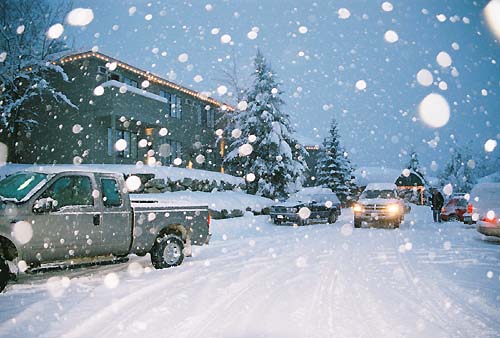
Now I'll easily admit, I enjoy a run in most all conditions. Give me heavy snow, driving rain, extreme heat, sub-artic cold, tropical monsoons … I appreciate them all. But icy sidewalks … well, that may be the only exception in my running playbook. I mean who really wants brave that treacherous icy obstacle course outside, where you literally have to claw and/or skate your way to the top of each and every hill? Sure, being able to do so successfully clearly demonstrates the utmost mastery and delicate combination of balance and timing, with a strange amount of luck tossed in for good measure. However, an icy failure surely brings about the real risk of slipping and falling, even spraining an ankle, or worse finding yourself literally skiing your way back down the hill towards a certain tailbone-cracking doom. But the fact remains, unless I want to resolve myself to an indoor season of life on the treadmill, I must tackle my fear of ice running.

Since I've apparently been in the mood for lists lately (see my recent posts — I'm slowly but painfully preparing for my New Year's resolutions), I thought I would try and formulate a better game plan to help increase my confidence of running on icy roads and sidewalks. Below are a few initial, random thoughts that came to mind as I traipsed over many an icy patch during my noon run in downtown Des Moines today. Interestingly enough, each potentially disasterous slip I avoided only solidified the list for me more. In fact, these tips could easily be used for snowy conditions as well.

  1. Choose to run on snow instead — I will spend more time "off-roading" to help avoid those troublesome areas. Maybe this is where additional trail running can finally entice more interaction from me. Besides, getting off the sidewalks and running through the snow has its own benefits.

  2. Stay wary of traffic — I will be careful and alert if conditions force me to run in the street. Deep snow may inevitably force me to share the roadway with the hoards of distracted holiday drivers, so I need to be mindful of running against traffic and constantly watch for vehicle intentions.

  3. Shorten my running stride — I will try not to over-extend my body's ability to be stable by taking longer than necessary strides. Instead, I will decrease the distance of my footfalls to provide better self-control and reduce fatigue.

  4. Run slower than I would in fair conditions — I will take my time while running on ice so that I may retain composure. This will help me to identify impending icy situations and more quickly determine a safer choice of route.

  5. Be aware of my path, and where I am going — I will do my best to constantly stay focused on the route I've chosen. Conditions can change quickly, so I want to be sensible and alert enough to detect what dangers may be waiting ahead. This also goes hand in hand with having a plan and making it known.

  6. Determine a better traction method — I will take time to research and possibly invest in better shoe traction options to improve my safety. Such as do-it-yourself screw shoes or store-bought trail shoes. I ran the recent LHF race in an old pair of Solomon XA Pro-2 shoes and they faired rather well through all the mud and rough terrain, but they can't obtain a solid grip on ice. However, I had noticed some Yaktrax Pro snow and ice shoe cleats at Scheel's recently, possibly a welcome Christmas addition to my winter running gear.

So, fellow winter ice and snow runners, have a little faith. This season doesn't need to force us to be a slave to months of treadmill-induced running. With a little wisdom and a bit of caution, we can hit the outdoors with assurance and poise; revealing all of the beauty this season has to offer. Run on with confidence.

Note: I'm well aware my wisdom of running is limited, so please feel free to leave a comment to this post if you have additional tips to share.

01 December 2007

Tips For Winter Running

As I look outside, I see this weekend's icy mix already beginning to creep into the area. And to help me better prep for cold weather training soon to come, I've decided to tackle the concern of which seems to be on most runner's minds lately. That is how best to gear up for and survive a season of winter running. You see, when it's 20 degrees outside our common sense tells us to stay indoors where it's much more comfortable. But that doesn't get the job done.

Here are a few widely accepted recommendations to help your winter season be not only survivable, but actually enjoyable.

  1. Have a plan and make it known - Most winter weather can produce treacherous conditions, which creates dangerous running routes. By letting someone know where you will be and for how long, you can be assured help is on the way if an accident occurs. Choose areas that are safe, well-lit, with low traffic. Along with it, bring some identification (personally, I run with a RoadID Wrist ID) and possibly a cell phone. If you choose to run in the dark, try running against the flow of traffic and wear light-colored clothing with reflective fabrics to be more easily seen.


  2. Run with a friend - Though running alone has its own benefits, by running with a partner you'll have a built-in motivational source and have a chance to chat with someone along the way. This can also provide a certain level of accountability, otherwise known as the guilt-eliminator. Besides, it's safer to run in numbers.


  3. Dress for the weather - Having the right apparel and layering makes all the difference in the world. Layering is the key to avoiding over or under dressing. A layer that blocks the wind, pants/tights and top that wick the moisture away from your skin and for the coldest of days a mid-layer that fits more loosely like fleece that insulates and moves the moisture from your base layer away from your skin. Your winter running wardrobe should include a running jacket, hat or headband, gloves, tights and a few long sleeve shirts. Your body temperature increases as you run, so you don't need many layers in most winter conditions. Which correlates closely with the next tip ...


  4. Don't dress too warmly - As all runners know, over-dressing is easy to do. However, over-dressing in winter conditions can increase the risk of overheating or excessive sweat. By dressing for 10-15 degrees warmer than outdoor conditions (typically for me, this is the wind-chill temp) your body temperature can maintain some level of consistency. Try remembering the basic technique of base layer, insulator layer, and outer layer. Each serve a purpose for avoiding perspiration while being breathable. Depending on the wind chill temperature, you may not always need all three layers. Usually, two of the three layers are sufficient but this becomes a personal decision. Also check out the chart below for possible frostbite concerns.


  5. Begin your run into the wind - A great trick of winter running seems to be starting your route by running into the wind. Not only does this allow you to avoid being chilled by colder air blowing in your face after you've been sweating, but you'll finish with the wind at your back and possibly speed your time.


  6. Warm up gradually - On very cold days, it’s a great idea to do some exercises or warm-ups prior to going outdoors. You may walk around the house, jog in place, do some jumping jacks or pushups, etc. The idea is to head out the door already warmed up (not sweating) so the first few minutes or miles are not spent trying to warm up in an already cold environment. Remember, the body’s defense mechanism when it’s cold is to pull blood from the extremities to your core to keep the body temperature regulated.


  7. Hydrate yourself - Like all activities, and especially for longer runs, drink plenty of water before, during, and after your running workouts. If you become dehydrated, the body has a much harder time regulating temperature. You need to remember that your body still loses a lot of water even if you aren't sweating.

  8. Be wary of uneven surfaces - In cold weather, your muscles typically will not react as quickly. This can increase your chances of muscle strains and other injuries when running in snow or icy conditions. If your route looks particularly hazardous, possibly opt for an easier course or try some cross-training until conditions improve.


  9. Change up your routine - It's bad enough running during the colder months, but even more difficult to get that long run in if there's inclement weather or poor surface conditions. My suggestion: be prepared to adapt to a variety of cross-training methods as needed. Only run half the amount you would normally run, but then spend the other half on an indoor bike, weight training, or pull out those old exercise videos. Either way, you'll maintain your strength and cardiovascular endurance until the weather outside allows your normal routine.


  10. Have fun - Running in colder weather, with snow and sometimes ice, can be rather tricky and cumbersome. But if you're wary of the risks, dress warmly, and make it a point to run safely, it's a whole new world out there to enjoy. I'll admit, winter is possibly my most favorite time of year to head outside to run. Not only am I tackling something many people wouldn't dare try, but I am able to experience the beauty and stillness that only this season can offer.
Enjoy the snow outside, and be safe.


13 March 2008

Stay On Your Feet

Running is an excellent form of exercise, yet subjects the body to considerable stress by placing extraordinary demands on an athlete's entire body. Each time your foot hits the ground, for example, it generates forces equivalent to at least three times your body's weight. Therefore, it is fairly important to do everything possible to protect your feet, ankles, knees, hips, and lower back vertebrae.

Below are considered the five most common chronic runner-related injuries, with tips for each to help you stay on your feet.

CHRONDROMALACIA (Runner's Knee)
Self-Diagnosis: Sharp pain underneath your kneecap.
Cause: A weak inner-thigh muscle makes the kneecap grind on cartilage.
Treatment: Gentle hamstring and calf stretches.
Recovery: Typically between four to six weeks.
Preventatives: Stretching of the quadriceps, hamstring, iliotibial band (ITB) and gluteal muscles.

ACHILLES TENDINITIS
Self-Diagnosis: Tightness in the Achilles tendon.
Cause: Speed work or shoes with too much cushioning.
Treatment: Buy a firm shoe and a quarter-inch heel lift to insert under the insole. Stop stretching for two weeks.
Recovery: Typically between six to eight weeks.
Preventatives: Stretching of the gastrocnemius (keep knee straight) and soleus (keep knee bent) muscles.

SHINSPLINTS
Self-Diagnosis: Sharp pain near the shinbone.
Cause: Overstriding while running down long hills.
Treatment: Stretch your calf muscles, shorten your stride, and avoid downhills.
Recovery: Typically between two to four weeks.
Preventatives: Stretching of the gastrocnemius and soleus muscles.

PLANTAR FASCIITIS
Self-Diagnosis: Pain in the heel when you first stand up.
Cause: Overpronation and floppy shoes.
Treatment: Reduce mileage by 50 percent and switch to a firm shoe with a midsole that doesn't bend.
Recovery: Typically between six to eight weeks.
Preventatives: Stretching of the gastrocnemius and soleus muscles.

ILIOTIBIAL BAND SYNDROME (ITB)
Self-Diagnosis: Pain and inflammation on the outside of the knee.
Cause: Anything that causes the leg to bend inwards, incorrect or worn shoes, excessive hill running, running on cambered surfaces, overtraining.
Treatment: Reduce or cease training load and intensity. Properly stretch the ITB. Return to running gradually.
Recovery: Between three to six weeks.
Preventatives: Stretching of the ITB, quadriceps, hamstring, and gluteal muscles.

Overall, running injuries can actually be quite common. However, they can easily be reduced by following proper stretching technique and conditioning, wearing the appropriate footwear, and constantly staying aware of your running environment. As well, be sure to start your runs by being warm and limber - muscles are more pliable when warm. And try alternating activities to avoid overusing particular muscles.

Most of all, listen to your aches. Remember: when in doubt,
just under do it.

01 August 2008

Cross-Training, Part II

As we learned a couple days ago, cross training is definitely something to consider adding to your normal training regimen. Now let's look at the types of benefits specific sports have to offer.


Benefits of Specific Sports

The following are great cross-training options that, when infused carefully into your workout routine, will enhance your half-marathon and marathon training. Be sure to follow the precautions and considerations from my prior blog post.
  • Cycling - This exercises related muscle groups such as the quadriceps and shins, both of which don't develop as rapidly as the calf muscles and hamstrings. Cycling also strengthens the connective tissue of the knee, hip, and ankle regions, thus reducing the risk of injury. After a stressful run, cycling also loosens fatigued leg muscles. Key points to remember: Don't cycle on a scheduled rest day. Since it's much more difficult to run after cycling, run first before heading out on your bike. Spin easily as opposed to grinding the big gears. Be sure your seat height and pedals are properly positioned. Finally, always wear a helmet and leave the music headphones at home.

  • Swimming - One of the best cross-training activities for several reasons. Swimming enables one to build muscular strength and endurance while improving flexibility. It is especially recommended for those who want to prevent injury, are pregnant, are recovering from an injury, are suffering from joint or bone conditions, or are overweight and want to exercise in a weightless environment. For the compulsive runner who has a hard time taking a rest day, swimming gives those fatigued leg muscles a breather while at the same time, provides an excellent upper body workout. Additionally, water is considered a healing medium, providing a therapeutic effect for all muscle groups. While gentle kicking alleviates some muscle soreness and fatigue, avoid using the kickboard for hard kick sets on your running rest day. Keep in mind that compared to other cross-training activities, your heart-rate may not reach as high a level while swimming (typically 10 to 20 beats per minute less than what it is for dry land activities) due to the loss of gravitational force, the horizontal position, and the cooling effect of the water temperature. Nevertheless, what truly counts is that the heart, lungs, and muscles are still processing oxygen.

  • Deep Water Running - This cross-training activity is just what the doctor ordered for the rehabilitation of many running injuries. Because there is no shock from foot strike, water running is a great alternative to a mid-week "easy day" run. For either purpose, it should be based on your current level of ability and present dry-land running schedule. While it is possible to run in the water without floatation aids, find a pool that has these devices (e.g., vests, belts, etc.) to make your workout easier.

  • Ergometer (Rowing) Machine - This is another great cardio-vascular activity that can be done on a rest day. It strengthens the hips, buttocks, and upper body while sparing the legs of heavy pounding. Be sure to learn proper rowing technique to maximize the benefits of this activity.

  • Nordic Track Ski-Simulator Machine - This challenging workout is highly effective in building/maintaining aerobic conditioning and endurance while strengthening the muscles of the upper and lower body. Because it requires the ability to balance and coordinate duel action movements of the upper and lower extremities, proper form must be learned and utilized. In short, this is great workout for runners interested in supplementing their training.

  • Stair-Master - This activity provides a great cardio-vascular workout while being rather gentle on the skeletal system. To achieve maximum benefits, proper form and posture must be utilized. Because of the vigorous exercise the leg muscles receive from this machine, it is not recommended as a supplemental workout for a complete leg rest day.

  • Elliptical Trainer - These machines provide a great total body cardio-vascular workout. Their oval-like (ellipse) motion provides the user with the feel of classic cross-country skiing, stair climbing, and walking all in combination. The elliptical trainer can be programmed to operate in either a forward or backward motion, providing a low-impact workout for all the all the major muscles in the legs. The backward motion emphasizes the gluteal muscles (buttocks). A great upper body workout can be achieved by using the two poles located on each side of the machine in conjunction with the leg motion.

  • Walking - This is a very under-rated activity that provides great therapeutic benefits following a long run or speedwork. While walking is not intended to be a substitute for an easy running day, a relaxed two to three mile stroll is a great way to loosen up the legs the day prior to a big race. Depending on the type of injury, speed walking is a great rehabilitation activity to maintain cardio-vascular fitness.
An additional reminder. Whether you use a fitness center's exercise equipment/gear or your own, it is vital that you obtain instruction in its correct use for the specific sports you select for cross-training. To receive the maximum benefit while minimizing your chances of incurring injury, it is also very important that you perform these activities utilizing proper form, technique, and posture. A certified fitness instructor can provide guidance in these areas.

31 January 2008

A Minnesota Winter

Alright, is it cold enough for ya? Yeah, thought so. I'll have to admit, I've been hibernating for a while now. I guess it's due to the semi-permanent blanket of frigid temperatures our area has been experiencing for far too many consecutive weeks now. And although it may be premature of me to be making this call, my instincts are telling me that we are finally about to experience our first traditionally cold, snowy one. Finally, after the "warmer" winters over the past few years here in central Iowa, a REAL Minnesotan winter!

It's cold outside ... okay more like freezing actually. But we runners must remember that even this type of weather shouldn't stop us from getting out there. Sure I enjoy hibernating inside, all warm and cozy with the wife and kids, but like I've stated many times you need to be prepared when you run in this kind of weather. The month of January has definitely proven to me that I need to take my own advice.

The truth is, cold weather CAN negatively affect your performance and recovery. If your body never truly warms up that means you're running on cold muscles which can increase the amount of muscle trauma. More muscle trauma means more aches and pains and a longer recovery. Although there are a host of reasons you may have struggled on your recent long run, it most certainly could have been related to the colder temperatures.

The good news is there are plenty of strategies for running long in the cold Minnesota winters. And you can do it while reducing aches, pains and prolonged recovery. Here's a few tips Runner's World recently published that I think many of us runners need to be reminded of:
  • Keep your body warmer by adding an extra layer on your legs. Many runners wear one pair of tights, but when the temperatures drop you can keep your legs warm by adding a wind-proof layer. I've found when running in extremely cold temps that wearing tights (loose or tight) plus a wind-proof shell pant blocks the wind and traps a layer of warm air around your legs.


  • Temperature is relative. If you are from a warm-weather climate like Georgia and not use to cold runs, you may need to add extra layers at temperatures at 40 degrees and below. Runners that adapt and are use to colder climates may not add that extra layer until it drops below 30 degrees. Plus, every person is different. It's interesting that I have seen many runners successfully train in shorts all the way down to 30 degrees. Not me, I'd freeze.


  • Find a wardrobe that works for you and keep track of it in your log. That way you will know what to wear in any kind of weather. That information will also be useful if you travel to a race that is colder than normal.


  • Take a warm to hot shower prior to your long run when the temperature is cold. It will warm your muscles, wake you up and better prepare you for the colder temperatures. Consider it a pre-warm up. You'll feel a difference in your performance and you're running buddies will appreciate you smelling fresh on the trail.


  • Warm up thoroughly with at least five minutes of power-walking. That is, walk very briskly to warm your muscles and prepare for the upcoming high impact run.


  • For cold, windy days select a course where you run one way with the wind at your back. Your body will be warmer and your pace a little more swift. If this isn't possible, run the first half of the long run against the wind and the second half with the wind at your back. That way you won't risk building up a big sweat and then freeze finishing the second half with the wind in your face.

05 February 2008

Running to Safety

Everyone knows that exercise is important. But while you are outside losing calories, you may be losing track of your surroundings. Exercise safety is an often ignored, important area of life. Here are some tips to ensure that the only thing in danger during your work out are those extra pounds:

Before the Run ...
  • Try to get a running partner.
  • Leave word with someone or write down where you plan to run and when you will return.
  • Carry some I. D. and change for a phone call.
  • Take a whistle with you.
  • Be careful wearing anything that distracts you, such as a radio/headset/earphones so that you are completely aware of your environment.
  • Avoid unpopular areas, deserted streets or lonely trails - and especially avoid unlighted routes at night.
  • Vary the route and the time of day that you run.
  • Run in familiar areas. Be aware of emergency phones and how they work, note the location of neighbors you trust along your route.
  • Know where police are usually to be found and where businesses, stores, offices are likely to be open and active.
  • Wear visible clothing and accessories -- bright colors, reflective colors, flashing lights, etc.
During the Run ...
  • Always stay alert. The more aware you are, the less vulnerable you are. Think about possible escape routes in case of a confrontation.
  • Take notice of who is ahead of you and who is behind you. Know where the nearest public sites are with some general activity - there is usually safety in numbers.
  • When in doubt, follow your intuition and avoid potential trouble. If something seems suspicious, do not panic, but run in a different direction.
  • Run clear of parked cars, bushes, dark areas.
  • Run against traffic so that you can observe the approach of automobiles.
  • If the same car cruises past you more than once, take down even a partial license number and make it obvious that you are aware of its presence (but keep your distance).
If Confronted ...
  • Run toward populated areas, busy streets, open businesses.
  • Ignore jeers and verbal harassment. Most importantly, keep moving.
  • Use discretion in acknowledging strangers. Be friendly, but keep your distance and keep moving.
  • Do not approach a car to give directions or the time of day. Point toward the nearest police or information source, shrug your shoulders, but keep moving. If you feel you must respond, do it while moving or where others are around.
  • Do not panic. Do not run toward a more isolated area.
If Attacked ...
  • Keep as calm as possible. Try to fix a description of the attacker in your mind.
  • Do not show fear or plead - this intensifies aggression in most cases.
  • Try to talk to the aggressor and look for an escape opportunity - a moment of indecision or distraction on the attacker's part.
  • Do not fight or struggle with the attacker unless there is clearly no other way out, especially if you are untrained in self defense.

02 July 2008

Ways To Cool Down

To go along with yesterday's post relating to hot weather acclimatization, here are a few tips for staying safe in the heat...


  • Respect your limits. Heat and humidity increase the physical challenge of running, and health problems can occur when you push beyond what your body can handle. Do not aim for a personal best on a warm, sticky day, particularly if you are not used to such conditions.

  • Acclimate. It takes roughly two to three weeks for the body to acclimate to keeping cool at higher temperatures. Give your body time to adjust.

  • Know the signs of heat problems. If you feel faint, dizzy, disoriented, or your skin is clammy and abnormally hot or cold, slow down or stop running. If symptoms continue, sit or lie down in the shade and seek medical help.

  • Drink enough. Drink throughout the day, so that your urine remains plentiful and pale yellow. Even mild dehydration (scant, dark-yellow urine) will make you feel sluggish and tire early during exercise, and can increase the risk of heat-related problems during exercise. In the heat, sports drinks are even better than water because the sugar and salt they contain form an "active pump" that transports fluid to cells more quickly than water alone. Before workouts or races lasting longer than one hour in the heat, drink 16 ounces of fluid several hours in advance, another 16 ounces in the hour before, and more just before the start if your urine isn't pale.

  • Don't drink too much. Overhydrating before and during exercise can cause a dangerous condition known as hyponatremia (water intoxication). This drop in the body's sodium levels can cause nausea, fatigue, vomiting, weakness, and in the most severe cases, seizures, coma, and death. To avoid hyponatremia, do not overdrink, include pretzels or a salted bagel in your pre-run meal, and use a sports drink that contains sodium. During exercise, drink no more than a cup of fluid every 15 to 20 minutes.

  • Eat a good pre-race meal a few hours before the run. Try a bagel with peanut butter and a banana—the protein and carbs will fuel your effort and aid in recovery.

  • Consume salt. Eat salted foods like a salt bagel, salted pretzels, or salted nuts. If you’re planning to race, eat salted foods all week prior to the event. On race day, consume one fast-food salt packet at the start line. Have another salt packet halfway through the race.

  • Protect yourself from the sun. Wear a cap or visor to shield your head, face, and eyes from the sun's burning rays, and wear sunglasses to protect your eyes. Use sunscreen on exposed skin, even on overcast days.

  • Check your meds. Do not consume products like cold medicines, ephedrine, pseudoephedrine, or anti-diarrhea medicines with dehydrating agents in them. They may increase your risk for heat illness. Caffeine products are only OK in doses you are used to taking on training day. Do not start taking a caffeine product on race day.

  • Wear synthetic fabrics. Unlike cotton, synthetics wick moisture from your skin so cooling evaporation can occur. Synthetics also decrease chafing and don't cling and cause a chill. Look for loose-fitting garments with mesh inserts under the arms, on the sides of the torso, down the arms, and on the outer thighs. Acrylic socks keep feet dry and cool.

  • Use water along the course (cups, spray stations) to cool yourself during races. If you are overheating, a cool spray will cool you down quickly and have a lasting effect as the water evaporates from your skin. Keep in mind, though, that drenched clothing will cling to skin and prevent evaporation, and wet socks can cause blisters, so use this strategy wisely.

05 January 2008

Winter Biking Tips

Welcome to a new year! I've been incognito for a few days here, as my cold continues to rage onward, but I am excited about getting back outside to my passion of running now that the weather is finally reaching above single digits. It seems that every weekend, except this one, has included significant accumlations of snow and artic temperatures. Just crazy! And I'm just dying to get out and try my new YakTrak-Pros!

In fact, I have been considering pulling my mountain bike out for a few snowy trips around the local lake trail. I really admire those who bike during the winter. They really are die-hard, winter weather enthusiasts. We are fortunate to have a great rider's group around here, with plenty of seasonal rides and races to participate in. They also have a solid base of riders who devote themselves to cold commutes to and from work via bike all winter long. It's something I've often considered doing myself.

In the spirit of those who brave the wintery months one two wheels, I thought I would share some tips to safe winter bike commuting:

  1. Follow the plow
    Unbeknownst to many summertime riders, bike trails are regularly plowed in many major metro areas.


  2. Ride straight
    Believe it or not, the medium during most winter commutes is often the same dry pavement as in the summer. Sand, salt, sun and snowplows eliminate ice and snow from roads in the days after a storm. But for slippery stretches riders should slow down and stay loose. Brake only on the rear wheel to avoid spinouts on slick surfaces. And be prepared to take your feet off the pedals if the bike starts to tilt.


  3. Watch out
    Cars are less aware of bikers in the winter months. Ride defensively and make eye contact with drivers.


  4. Choose the right ride
    Don’t use your $3,000 LeMond or full-suspension mountain bike in the snow. Sand, salt and grit can destroy suspension and gears. Instead, go with an older bike you designate for cold-weather use, adding fenders, bright lights and winter wheels. Many cyclists employ single-speed models in the winter, as they have fewer moving parts and require less maintenance.


  5. Cold and clean
    Unless you plan to clean it off, keep your bike cold and store it in the garage. A room-temperature bike in new snow can cause ice to form on brakes and gears more easily. Also, keep your chain and gear cassette lubricated for best operation.


  6. Go studs
    Carbide-studded tires can increase grip on snow and ice. Many cyclists swear by them.


  7. Protect your core
    Any outdoorsy person knows that layering is the key to staying warm and managing sweat in the cold. The best configuration for biking includes a wicking base layer on top followed by an insulating fleece or similar mid-layer, then topped with a waterproof and windproof shell jacket. For the legs, use long underwear topped off with a shell pant.


  8. Heads up
    Jacket hoods are a no-no, as air funnels in as you move, inflating a hood like a sail. Instead, riders wear balaclavas and sunglasses or ski goggles. Tight-fitting (but warm) fleece skull caps are popular. Top it off with a helmet, perhaps sized larger in winter to fit over all the insulation.


  9. Warm hands and feet
    Switch out gloves for mittens or bifurcated “lobster”-style handwear, which keep fingers close together and warmer. Winter boots, not bike shoes, are best for the coldest days, but use platform pedals with aggressive tread for good grip as you crank. Above 20 degrees, many riders get away with bike shoes, employing neoprene covers to add insulation and buffer warm air.


  10. Use public transit
    Many metropolitan trains and public busses allow bikes, letting riders surrender on the worst days and hop a ride home. Bike near a bus route and you have bail-out points should the commute prove too long or laborious in the snow.

30 September 2008

Snapshot: NYC Marathon At A Glance

When - Sunday, November 2nd
Begins at - Fort Wadsworth, Staten Island
Ends at - Tavern on the Green, Central Park

With barely over a month until the race, I felt compelled to begin a series of "snapshot" blogs. These will be all about the NYC Marathon: general runner information, experiences to expect, and survival tips, as well as some typical visitor information for the Big Apple. First in this series, marathon information at a glance.

One of the world's most renowned road races, the New York City Marathon drew nearly 100,000 applications in 2007 alone. It is a travelogue of New York's five boroughs as it passes through neighborhoods which represent virtually every major cultural and ethnic group on earth. A remarkable event that celebrates individual achievement, it also brings together millions of New Yorkers who line the streets for an entire afternoon to cheer and encourage the participants - from the winners to those that finish hours later. It is a city that recognizes courage and perseverance, as well as coming in first.

Over the years, the New York City Marathon has grown from a modest race that took place entirely in Central Park to a city-wide event with well over 38,000 runners. Participants, as well as spectators, come from all over the globe with over 100 countries and all 50 states represented in one of the world's largest and most famous running competitions. The race attracts many world-class professional athletes - not only for the more than $700,000 in prize money, but also for the chance to compete in the media capital of the world before more than two million cheering spectators around the race course, as well as 315 million worldwide television viewers. Crossing the finish line in Central Park is one of the great thrills of a lifetime, as any one of the more than 700,000 past participants will attest (and something I am definitely thrilled to be able to soon consider myself part of!)

The course begins in Fort Wadsworth on Staten Island and the first two miles are over the Verrazano Narrows Bridge, which offers a panoramic view of Brooklyn and Lower Manhattan, as well as the Fire Department boats that shoot geysers of multi-colored water hundreds of feet up into the air as the race begins. The route then wends its way through Brooklyn, the borough that features the largest segment of the race, with runners passing through an amazing variety of neighborhoods, including Bay Ridge, Sunset Park, Bedford-Stuyvesant, Williamsburg, and Greenpoint. At 13.1 miles, runners cross the Pulaski Bridge, marking the halfway point of the race and the entrance into Queens. After a short stay in Queens, runners must take on the dreaded Queensboro Bridge before finally arriving in Manhattan. The race then proceeds north on First Avenue, crossing briefly into the Bronx for a mile before returning to Manhattan. It then continues south through Harlem down Fifth Avenue and into Central Park. At the southern end of the park, the course leaves the park and continues along Central Park South, where thousands of spectators cheer runners on during the last mile. At Columbus Circle, the race re-enters the park and finishes outside Tavern on the Green.

It is these final miles through Central Park that determine winners, and annually witness the most dramatic moments of the race as runners struggle to complete the 26.2 mile course. Central Park, the scene of the first race of 127 participants in 1970, is ultimately the center stage that welcomes the runners, all winners in their own right, to the finish line.

>> Download the Official Marathon Course Map
>> See an amazing pictorial of the actual NYCM course